AI Infrastructure Takes Center Stage at Ai4 2026
AI4 2026 brought together AI leaders, innovators, and infrastructure experts to explore what’s next for artificial intelligence – and Vultr was there to help shape the conversation.
From a keynote on the future of AI infrastructure to expert sessions from industry leaders and conversations at our happy hour, Vultr’s time at Ai4 highlighted a clear theme: The next phase of AI will be defined not only by more powerful models, but by the infrastructure that makes AI practical, efficient, and scalable.
Building the infrastructure for the next AI era
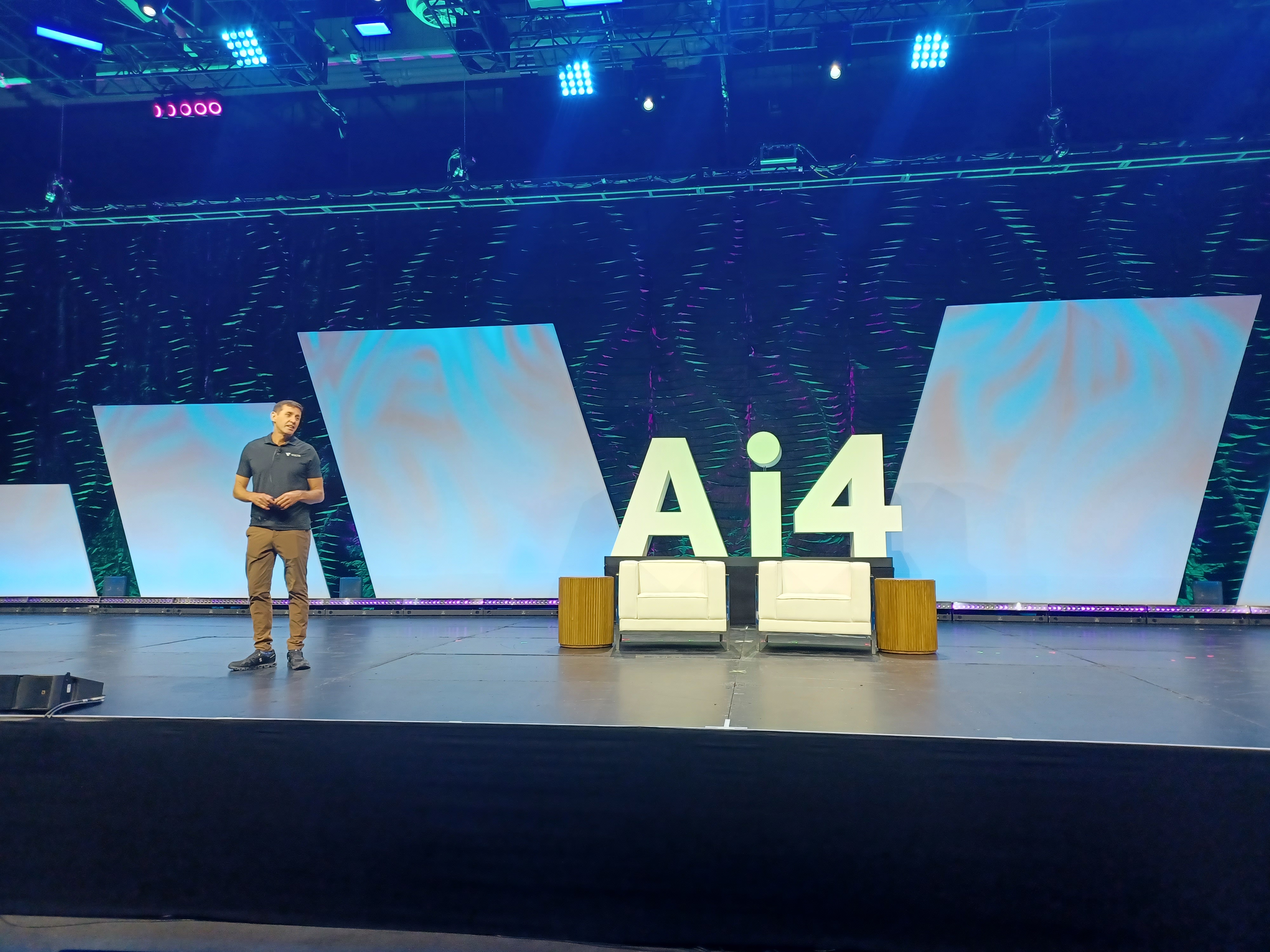
Vultr CMO Kevin Cochrane took the Ai4 stage for a keynote focused on the evolution of AI infrastructure and the transition toward AI-native applications for the enterprise.
Kevin explored the beginning of a 30-year supercycle in computing, as organizations move beyond centralized architectures toward more open, decentralized systems built around real-world AI workloads.
His keynote outlined three principles for building AI-native applications at enterprise scale:
- Architect for real-world outcomes. AI applications need infrastructure that supports distributed inference and brings compute closer to where applications actually run.
- Architect for efficiency. The future of AI infrastructure is heterogeneous, combining different types of compute to balance performance, flexibility, and cost for specific workloads.
- Scale AI-native application delivery. Developers need infrastructure abstractions and composable, reusable building blocks that make it easier to build and deploy AI applications without managing unnecessary complexity.
The takeaway was clear: The future of AI isn’t simply about building bigger models. It’s about creating an infrastructure foundation that makes AI useful, efficient, and scalable across the enterprise.

Insights from across the AI ecosystem
Throughout Ai4, Vultr also brought together leaders from across the AI infrastructure stack to share their perspectives on the technologies shaping the next generation of AI.
Sessions included:
- Mistral AI: Demonstrating how developers can run large language models locally and explore AI development through vibe coding.
- VAST Data: Examining the role of real-time data infrastructure in powering autonomous AI.
- Supermicro: Addressing the top priorities in AI infrastructure – speed, efficiency, and simplicity.
- Nutanix: Exploring an enterprise-grade platform for agentic AI and how organizations can build a more standardized approach to AI infrastructure.
- Nokia: Exploring how AI networking can help organizations unlock the full potential of their GPUs.
- DDN: Discussing the data engine required to power the growing AI economy.
- Cycle.io: Exploring ways to standardize infrastructure for agent harnesses and simplify AI application delivery.
- LegionEdge: Looking beyond general-purpose models toward large language models and the future of specialized AI.
- LegionEdge: Building AI agents that can manage memory, context, and tools effectively.
Together, these conversations reinforced the importance of taking a systems-level approach to AI. Compute, networking, data, orchestration, models, and developer tooling all play a role in turning AI capabilities into production applications.

Connecting the AI community
Ai4 was also an opportunity to connect with customers, partners, developers, and AI leaders beyond the conference sessions.
Vultr hosted a happy hour where members of the AI community could continue conversations from the show floor, exchange ideas, and discuss the challenges organizations face as they move AI from experimentation to production.

These conversations reflected the broader shift happening across the industry. Organizations are no longer asking only what AI models can do. They’re asking how to deploy them efficiently, where workloads should run, how to manage increasingly diverse infrastructure, and how developers can build AI-native applications without being constrained by infrastructure complexity.

Building what comes next
Ai4 2026 underscored a fundamental shift in the AI landscape. As AI becomes embedded in enterprise applications, infrastructure must evolve alongside it.
That means supporting distributed workloads, embracing heterogeneous compute, simplifying infrastructure management, and giving developers flexible building blocks for building and scaling AI applications.
Vultr is focused on making that future possible – providing the infrastructure, flexibility, and global reach organizations need to move from AI experimentation to production.
The next era of AI won’t be defined by models alone. It will be defined by the infrastructure that enables them to deliver real-world impact.