Why CPUs Are the Workhorse of Agentic AI Infrastructure
Not too long ago, the CPU was the undisputed king of enterprise cloud compute. From serving web requests to running databases, orchestrating virtual machines to executing enterprise business logic, CPUs would handle 100% of the compute burden. And then AI came along.
Suddenly, GPUs were the belle of the ball. The key infrastructure question of the day was how best to build hyperscale GPU clusters to support LLM training and inference. Once-important issues like cloud cost optimization were parked in the scramble for GPU capacity.
Now, however, things are changing once again. The focus is shifting away from hyperscale build-outs toward supporting agentic workloads at the enterprise level.
This is a very different architectural challenge. GPUs are, of course, still necessary, but they are not sufficient. Successful agentic AI deployments will be based on an integrated stack of CPUs and GPUs. The result is a sustainable infrastructure model that delivers the agentic user experience enterprises need.
How do agentic AI workloads affect compute requirements?
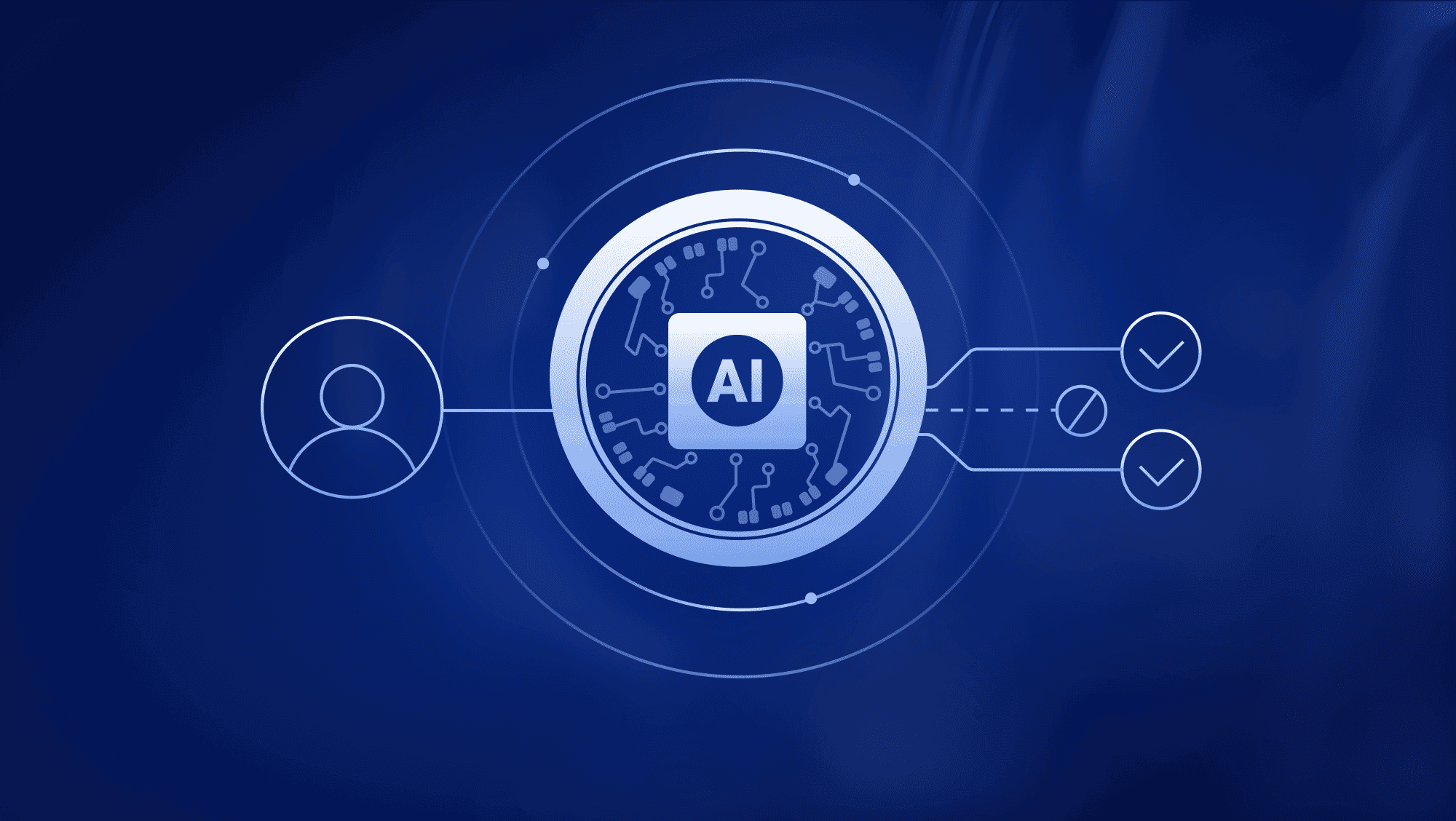
To understand just why CPUs are so vital to agentic AI infrastructure, it’s useful to visualize a typical agentic workload. A single user request would look a little like this:
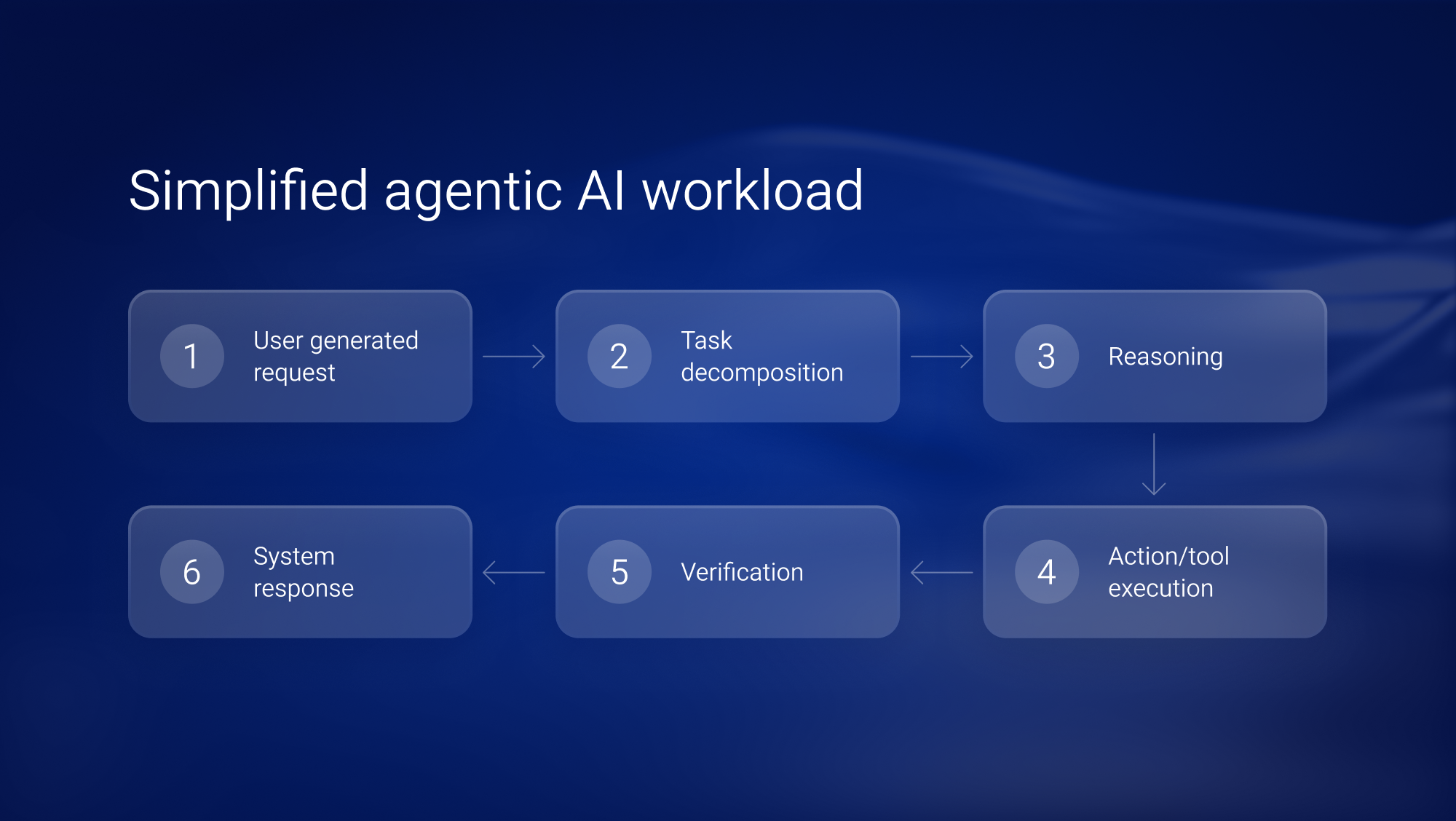
Once a user has submitted a request, the AI agent autonomously breaks it down into smaller subtasks. The agent then decides what to do next. This could include delegating subtasks to other agents, querying databases, connecting to APIs, or running applications in agentic sandboxes. In addition, the agent is responsible for checking permissions, retrieving memory, validating outputs, and then looping back through the process again to confirm results.
How can organizations optimize cloud compute for agentic workloads?
What’s clear is that there’s much more required than the raw processing power that GPUs provide. Agentic AI demands orchestration, agent execution, tool calls, and policy and security processes. The CPU is vital to every step of the agentic workload, serving as the host, orchestrator, and driver of the entire agentic system.
From an infrastructure perspective, optimizing agentic workflows therefore demands a strategy that balances GPU and CPU requirements. According to AMD, the shift means moving away from the CPU-to-GPU ratios of 1:4-8 seen in generative AI deployments toward something much closer to 1:1 (or even higher on the CPU side in some cases).
However, this isn’t just a numbers game. As AMD writes: “The shift from chatbot-style AI to agentic AI is not just about putting a few more CPUs next to the same GPU-heavy rack design. It’s bigger than that. It’s a structural shift in data center architecture.”
How can businesses right-size their agentic infrastructure?
The key to success is understanding how CPUs can support agentic needs. There are three key requirements to consider:
- AI agent support. Agentic-ready CPUs can act as cluster head nodes to support GPU orchestration and workload scheduling through providing task decomposition, state and context management, and guardrails and governance. High-density CPUs can also help with data preparation and pipelines, streaming the real-time context data to fuel GPU reasoning.
- Agent sandbox support. CPU infrastructure can support the rapid deployment of sandbox environments that enable AI agents to generate, test, and run untrusted code without safety risks or the dangers of accessing unauthorized resources.
- Core workload support. AI agents use tools that were originally built for human users. They therefore drive massive core cloud workload demand surges. In multi-agent systems, this can exceed the capacity of existing systems, impacting expected performance levels and reducing AI agents’ productivity potential.
How can enterprises accelerate their agentic AI deployments?
As enterprises make the move to agentic-optimized cloud infrastructure, they need to invest in CPU clusters that can optimize agentic AI workflows. Vultr VX1™ Cloud Compute delivers just that.
Delivered through AMD EPYC™ processors, VX1 delivers against all three key agentic CPU requirements:
- For agent support: VX1 instances serve as cluster head nodes, powering GPU orchestration and workload scheduling. This frees GPU capacity for core AI reasoning, helping businesses optimize their GPU fleet. Additionally, VX1 enabled effective data streaming. The processors powering Vultr VX1 support AVX-512, which can accelerate AI data ingestion by enabling parsing, cleaning, and transforming more data per CPU clock cycle.
- For sandbox support: Vultr VX1 supports nested virtualization, enabling businesses to deploy microVM solutions with their own kernels for secure sandbox isolation. With up to 96 cores/192 threads and 50 Gbps high-throughput networking, Vultr VX1 delivers the CPU density and low-latency networking required for effective multi-agent sandboxes.
- For core cloud workloads: Vultr VX1 provides agent-ready performance for applications including ERP software, SaaS platforms, analytics services, microservices and API backends. These are the very same workloads seeing demand spikes driven by AI agents.
The next phase of AI is underway. Businesses that move toward full-stack cloud infrastructure will be able to easily access the full range of compute types required to optimize the agentic workload, with GPUs handling model execution and CPUs handling orchestration, agent execution/tool calls, policy/security, and surrounding processing. It’s time to turn the promises of agentic AI into reality.
Download our new whitepaper, “CPUs: The Unsung Hero of Agentic AI,” to learn more about how to accelerate your agentic AI infrastructure.